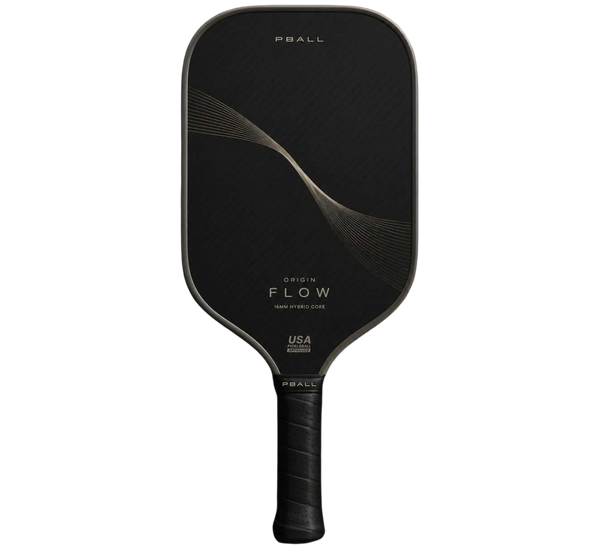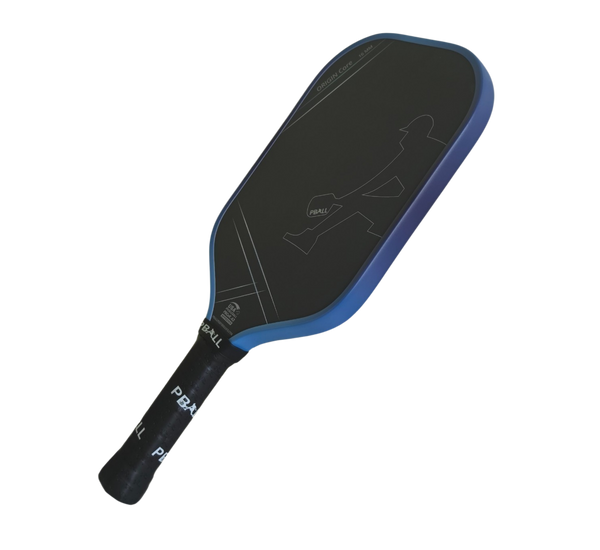
PBALL ORIGIN CORE Power Performance Pickleball Paddle
3 couleurs
239 $
The PBALL ORIGIN CORE is our first pickleball paddle.
Not sure how to choose a pickleball paddle? It comes down to three things: weight, grip size and how the face feels on contact. Pick it up, play with it, and fine-tune it with an overgrip, a cover or clip-on weights from the gear collection.
Four factors decide almost everything: weight (maneuverability versus power), core thickness (control versus punch), surface material (carbon for spin, fiberglass for power) and grip size. Start from your playing style. If you play close to the net and want to control dinks, get a 16 mm carbon core. If you hit hard from the baseline, a heavier, head-weighted 13 mm will suit you better.
Aim for an all-around paddle: about 7.8 to 8.2 ounces, 16 mm core, standard shape and a large sweet spot. That forgives off-center hits best while your technique develops. Avoid very heavy or elongated paddles: they add power a beginner doesn't need and make fast exchanges at the net much harder to control.
The 16 mm core is thicker: the ball sinks into it more, which cushions the shot and gives more control on dinks and resets at the kitchen line. It's the dominant choice among intermediate and advanced players. The 13 mm sends the ball back faster and harder, with less forgiveness on imperfect hits. It suits an aggressive baseline game and players coming from tennis.
A carbon surface, often called raw carbon or T700, is stiffer and more textured: it grips the ball and allows more spin, with a precise touch and slightly less raw power. Fiberglass is softer and returns more energy: more power, less control. Composite combines the two for an all-around profile, generally at a more accessible price.
Under 7.8 ounces, a paddle is light and quick at the net, but you have to generate your own power and the arm works harder. Between 7.8 and 8.3 ounces is the all-around zone where most players land. Above 8.3 ounces, you gain stability and power, but your reflexes at the net slow down. If you have a history of tennis elbow, stay on the lighter side.
If you win points at the net, with patience, through dinks and resets, get a control paddle: 16 mm core, carbon surface, standard shape. Short balls become noticeably easier to place. If you win points by attacking from the baseline, go for a power paddle: 13 or 14 mm core, elongated shape, head-weighted. You'll give up some forgiveness in exchange.
A pickleball paddle generally lasts one to three years. At three games a week, expect around a year before the core loses its pop. The signs: a duller sound on contact, balls leaving slower for the same effort, a shrinking sweet spot, a surface that's gone smooth and stopped biting. Visible delamination is covered under our 1-year warranty.
A pickleball paddle is solid, unstrung, smaller and much lighter than a tennis racket. It hits a perforated plastic ball, not a pressurized felt ball. A padel racket is also solid but perforated with holes, thicker and heavier, with a mandatory wrist strap. The three aren't interchangeable: surface, weight and response have nothing in common.
Every PBALL paddle is sold on its own, with no overgrip or protective cover included. The 1-year warranty against manufacturing defects applies automatically, no registration needed. For care and accessories, our paddle eraser, overgrips and covers are in the Gear section.
Yes. PBALL demo paddles are available at several pickleball centres, letting you feel the weight and balance before deciding. It's the best way to settle between two models, especially if you're torn between a 13 mm and a 16 mm core.